Victoria Swarovski, from Stanglwirt Bootcamp to Eurovision Hosting: Eighteen Years of Show Business
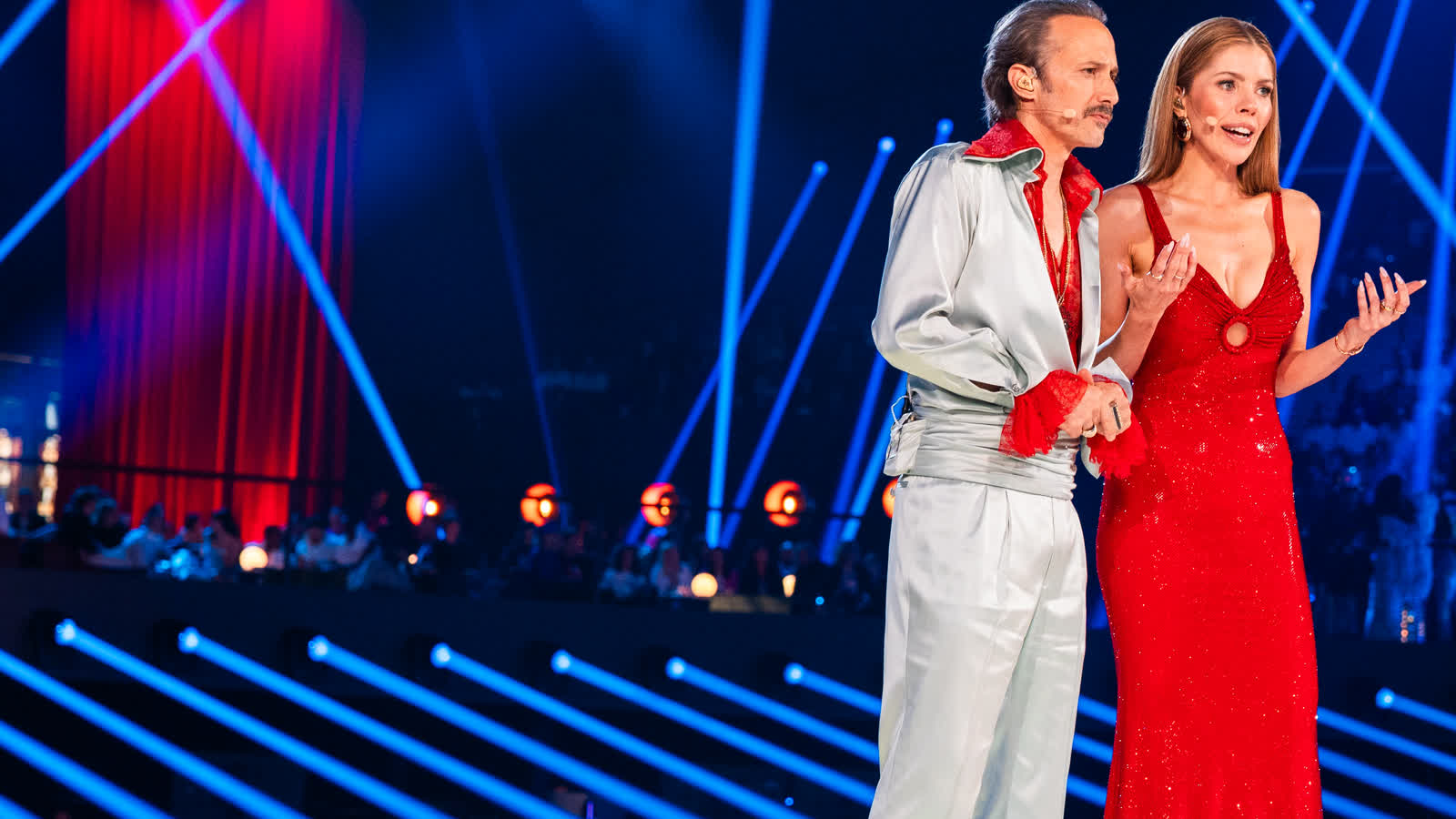
Last night, the Eurovision Song Contest final. Wiener Stadthalle. On stage: Victoria Swarovski, together with Michael Ostrowski, in front of about 150 million viewers.
What most people do not know: before she became a host, her career started as a singer. With a cheeky email to me. That was eighteen years ago.
I spent 30 years in the music business. I have the privilege, or the curse, that I cannot turn on the radio and I cannot look at the gossip-magazine corner in a supermarket without being reminded of some episode from my life. Everywhere I go, people grin at me. People I spent time with, or was connected to in some business way or another.
Victoria Swarovski is one of them. She recently told the backstory from her side in the GLAMOUR cover interview April 2025: the cheeky first email at thirteen, the songwriting camp, the Japan hits, the single deal with Sony. Here is the backstory from my side, once, in full detail. Otherwise I will end up like my recently deceased friend Jack Ponti, who liked to say: “I forgot more than you ever knew!”
The Cheeky Email From a Thirteen-Year-Old

Back then I was a music producer, publisher, and owner of Mozart & Friends Limited, a co-publisher with AMV Talpa, the German publishing arm of John de Mol’s Talpa Music. The same John de Mol who invented “The Voice” shortly after that. I had just set up several international songwriting camps.
Then the email arrived. As far as I remember, there was a photo of young Victoria attached, and the text clearly pointed out that she belonged to the Swarovski family, and to the direct family line of the crystal company. She wrote clearly that she wanted to become a pop star. What was missing was the one thing that really interested me: a demo of her voice. Victoria remembers the email differently today. In the GLAMOUR cover interview April 2025, she describes it as a “very cheeky email, looking back”, without a last name, without a demo song, without a photo, and with “a lot of spelling mistakes”, and she says she had told her family nothing about it. Eighteen years can shift memories. I am giving my version, the way I have it in my head.
More or less, I wrote back to her: “I can only help you if you send me a meaningful recording of your voice.” I admit it: the famous name played a role in that moment. If someone from such a prominent family environment writes an email, that person gets a different kind of first attention. It would be dishonest to hide that.
The demo came a little later. And it was good. Good enough that I decided to keep pursuing the package of person and voice.
Mövenpick Alte Oper Frankfurt: The First Meeting

We met at the Mövenpick by the Alte Oper in Frankfurt. Victoria was thirteen and came with her stepfather. We talked for a long time: whether and how she had grown up with music, which singers she listened to, what she had done herself up to that point. My point was clear: her competition in the market consisted of people who had been singing since early childhood, writing songs, and in some cases growing up in musician families. She could not bypass that if she wanted to take the path seriously. She had to work hard, and luckily her family was in a position to finance that kind of work.
My proposal: not a music school, not years of private lessons, but a bootcamp. Over a certain period of time, work intensively again and again with a singing teacher and on performance. Step by step, find out where her strengths were, where she felt at home musically, which direction this should take. Singing is like sports. Without training, it does not work. The family agreed. Development project, no quick single shots, clear line.
After the meeting, her stepfather explicitly thanked me for the perspective I had opened. For Victoria, he said, a new world had opened up.
The Stanglwirt Bootcamps, Fall 2007 to Summer 2008: Substance, Not a Quick Shot

We did it at the Stanglwirt in Tyrol. Over several months, in several stages. The first trips started in late fall 2007. The series continued into the summer of 2008. At the breakfast table next to us in the Wellness Hotel Stanglwirt: Vitali Klitschko, preparing his comeback against Samuel Peter with his coach. Victoria was fourteen at the time, fourteen or fifteen in the summer of 2008.
The idea of building something serious in a quiet place with a clear training structure was obviously not mine alone. The method does not care whether the person is a professional boxer or a fifteen-year-old singer. Substance needs silence and repetition. That is true everywhere.
The bootcamps ran over several stages. Voice training with the vocal coach. Performance work. Video recordings to document the development. The material is still with me today. Victoria developed well. She was on a solid path toward becoming a serious young pop singer. In the background, my first conversations with record companies were already running. They understood immediately: this is substance, not gossip.
One scene from that time explained a lot to me later. In the middle of the bootcamp, Victoria asked me: “What happens at the afterparties?” I was confused and asked back: “Which afterparties?” She meant the world around it, the one she knew from magazines. Glamour, celebrity world, the life of a pop singer after the show. That was her idea of being a star. And at the same time it was the opposite of what her family plan had in mind: private school, law or business, then entering the company. She described that path as horror. Apparently she told herself: then I would rather become a star. I have the name, we will figure out the rest. The will was absolutely there.
The Pivot: From Bootcamp to Mario Barth Record Deal
Then the project tipped. The family wanted it faster, with more shine. The bootcamp series was not continued. During a Caribbean vacation, the family happened to meet Mario Barth, and suddenly Barth was supposed to get the quick record deal. Sony signed a single deal with Victoria. I was out of the project.
What got lost was a small but decisive difference. The bootcamp had moved toward an acoustic, organic singer-songwriter sound. Substance, her own voice, time. The shortcut through the comedy star ended in standard dance-pop. Organic musical selection and development versus a fast format. The absurd thing: this family could easily have afforded the long road. What was missing was the confidence to trust it.
“One in a Million”: How the Song Came Back Through the Side Door
What the family did not know: one of the songs Sony later chose for Victoria came back through the side door from my own publishing company. Sony had anonymously been looking for dance-pop songs for a “new artist”, without naming the artist, and I sent a suitable song from my catalog. I only found out afterward that the “new artist” was Victoria. The song “One in a Million” had been created in one of my songwriting camps at my studio in Gießen, written by Vincent “Beatzarre” Stein (if you do not know him in German hip-hop and pop production, you live on another planet), Alfred “Alf” Tuohey, and Mimoza Blinsson. Tuohey and Blinsson were signed with me. Mimoza had sung the demo herself. She was eighteen then, a brilliant voice and songwriting talent for a world career. Later she co-wrote “Kings & Queens” for Ava Max, one of the global pop hits of 2020 and one of the “most played songs on american radio” (ASCAP Pop Music Award 2021, BMI London Pop Award 2021), later with more than one billion Spotify streams.
Studio Session Gießen: The Disaster That Never Left the Studio

Sony called me and asked whether we could record the vocals with Victoria in my studio in Gießen. I said yes. It was more than a year after the last bootcamp.
The session was one of the biggest disasters I ever experienced as a producer. Mimoza in the room, quiet and tense. A talent of that size had to listen to someone who, after a year without training, was not consistently on pitch. Singing is like sports. That is why future soccer superstars are already gifted soccer players at eight. If you do not train for a year, you start almost from zero again. The bootcamp would have been her training. The family had cut it off.
My own mistake: I had delegated the vocal recording to Alf and Mimoza. Two co-writers who had sung their own demo perfectly, who knew their song in their sleep. But they were on the song. They were not vocal producers for a singer in that condition. I knew that in the first hour.
And behind that was the real difference. At the Wellness Hotel Stanglwirt we had worked out songs in a trusted environment, with vocal coach and bootcamp team, step by step, without time pressure. Here Victoria was supposed to sing a supposed global hit in one day, in a major-label setting. On a pop-label path a comedian had pitched for her. That was a different sport.
The Rescue in München: Vocal Coach, My Own Cost, New Attempt
I organized a second attempt. München, May 2010. At my own cost. I brought the bootcamp team back together, flew the singing teacher to München, and scheduled one solid day of training before the session. Crew on site: Alfred “Alf” Tuohey from the “One in a Million” songwriting line and my studio assistant at the time, Johannes Bürmann, today a well-known producer for advertising music.
That day Victoria admitted to the singing teacher, in confidence, that she had not sung at all since the bootcamps. We never spoke about it, so I can only guess. But for her, the way the bootcamps were cut off must have felt like a betrayal by her own family. That instead a comedian was supposed to get the quick record deal, and the ongoing build-up was broken off.
I then ran the vocal session in München myself with the vocal coach. I did the vocal editing and mix myself as well. Not because I needed to control the project, but because any other outcome would have become a public defeat for a young artist at the start of her career.
Long Radio Silence, Then Japan Number 1 and “Conspiracy”
After the München recording: long radio silence from Sony. No payment for the production, no contract, no message about a release.
In parallel, Alf Tuohey had sent the original song demo with Mimoza’s voice to Japan. The Japanese said yes immediately. A short time later, the song was number 1 in the Japanese charts with Yamashita Tomohisa, with physical single sales that were still possible there at the time. I informed Sony Germany, as a matter of course, that the song was one of the hits of the year in Japan. Suddenly Sony was fully on board and had “decided long ago”: this is our single. That is how “One in a Million” was released in Germany, too.
Victoria’s family smelled a conspiracy. Now “a Japanese guy had released her song”. I could only answer the accusations against me by saying that neither Sony nor the family had ever given me money or contracts for my own work. After years of advance work. Organizing the bootcamps, close work with Victoria and the family, producer work, label talks, vocal editing, mix. The München rescue was at my own cost.
The Barth Narrative and the Chart Entry
Mario Barth did his part and placed Victoria in various shows. Around that, an adventurous story was constructed: Barth had heard a girl singing in a supermarket and immediately knew she would become a star.
The song entered the Top 50 of the German charts in November 2010. Number 49 in Germany, number 45 in Austria, nine weeks on the charts. The credits are publicly documented (sources hitparade.ch and offiziellecharts.de): Marc Mozart as producer and mixing engineer.
Narnia: The Second Collaboration
Sony then submitted Victoria as the artist for the title song of the German film version of “The Chronicles of Narnia: The Voyage of the Dawn Treader” to 20th Century Fox in Hollywood. A few weeks later Sony asked me to record that song with Victoria after all, because the last production had worked so well. The original song was by Carrie Underwood, US country superstar and co-writer, later nominated for the Golden Globe for Best Original Song. My assignment: in five days, produce a complete playback from scratch, record a Carrie Underwood song with a singer without training, and deliver the whole thing mixed and mastered.
That was a job where I physically went to my limit. Close to tinnitus. Lived in the studio for a week, no more than two hours of sleep per night. Two days of vocal recording, the rest editing, and on the side building the backing track with full Nashville instrumentation plus Hollywood orchestra. One last time, fighting to the edge of my strength for Victoria’s career. It was to remain the last time.
“There’s a Place for Us” came out, and it was in the movie. Music video at the end of November 2010.
After that, I never heard from Victoria or her family again.
ESC 2026 in Vienna: What the Bootcamp Lesson Showed Last Night
Eighteen years later, Victoria Swarovski is standing on the Eurovision stage in Vienna. Together with Michael Ostrowski, she hosts the biggest live music competition in the world, in front of about 150 million viewers.
In the first semi-final, a wave ran against the hosting. Too stiff, too teleprompter-like, the opening not funny. In the final last night, Victoria and Ostrowski dealt with it openly. On stage, they said they had read social-media posts backstage. They turned the criticism into a short meta gag and then pulled themselves back. The production reduced the two in the final: less hosting, more acts (source: t-online, May 16, 2026).
That was grown-up craft. Take live feedback instead of defending yourself, keep going, change the performance, stay standing. That is its own discipline.
In the GLAMOUR cover interview April 2025, she herself described where she takes that discipline from. Asked for her best career advice: “If you fall, get up, fix your crown, keep going. There is nobody who has not experienced a setback. That is completely normal, but you have to keep going. You must not give up.” She calls the “best mistake” of her professional life her first “Let’s Dance” hosting job in 2018 at age 24, after the media tore her apart: “But giving up was not an option for me there either.” Today she has hosted the show longer than any other host before her.
That is bootcamp logic. Singing is like sports. Without training, it does not work. Performance is like sports. Defeats are training, too.
What the Nepo-Baby Narrative Misses
Throughout Victoria’s career, the nepo-baby suspicion keeps coming up. Swarovski bought the daughter in, all of it was just money. That is unfair.
If you look at the thirteen-year-old who cheekily wrote to a producer back then, you see something else. A teenager trying to find her path in life. With the confidence to say: I have a name, I can do something with it, I want to be a pop star. That is refreshing. That is initiative. At thirteen, it is remarkable.
What happened afterward is a different story. Without the ongoing musical build-up, the career ran in a different direction. Which direction exactly and why, I cannot judge from today’s perspective. We never spoke about it. But when I look back today, I have great respect for the young Victoria who set all of this in motion.
From my point of view: the thirteen-year-old dream was betrayed. From Victoria’s point of view today, she probably thinks she was lucky. And in the end she is long grown up and decides for herself what she does.
What This Story Says About Giving Into People
What happened back then between me and the family is not part of Victoria’s public story. That is fine. It is her story. The shorter version is the one you hear more often today. But the longer one is not worse, and it is verifiable.
I am not writing this to demand something back. I am writing it because the pattern repeats itself. I have seen it in three industries. As a music producer in the 2000s and early 2010s. As an entrepreneur today. And in several artist mentorings in between.
If you put substance into a person, without contract, without equity, only out of conviction, then the later value of that person belongs to that person. That is the rule. It is right.
But do not expect a broken word at the beginning to become unbroken through later success. It does not.
What many people outside the creative industry underestimate: producers, songwriters, and coaches invest real lifetime and real risk long before it becomes visible whether anything will come of it. If you are a mason building a house, you get paid for the scaffolding. With creative people, that is often forgotten. Maybe because timesheets and scaffolding invoices are physically visible, while producer hours and vocal-coach flights are not. But the work is real, and it should be paid for.
If you invest in someone today, without equity, without contract, only out of conviction: do it with open eyes. That is not a prevention against disappointment. It is respect for your own work.
And if you are a producer, entrepreneur, or artist mentor today building a bootcamp line, and it gets cut off: stay with your sentence. Sometimes the proof only comes eighteen years later, live in Vienna, in a short moment where a grown-up human being handles criticism with sovereignty instead of smiling it away.
The bootcamp still happened. It was the ignition point. A teenager’s dream became proof that it could really work. What Victoria learned about herself there, she never unlearned. The career after that ran through the traps such an environment creates. But the woman who today, at thirty-two, hosts the Wiener Stadthalle live on TV in front of 150 million viewers knows since Tyrol, summer 2008, that she can do it.
Featured image: Victoria Swarovski and Michael Ostrowski at the Eurovision Song Contest 2026 in Vienna. Photo: © EBU / Corinne Cumming. Source: Eurovision Song Contest Image Bank.